50 Questions to Ask Your Mom Before It's Too Late
Your mom is your family's unofficial historian. Researchers at Emory University call her the "kin-keeper," the person who holds the stories together across generations. But 50.7% of Americans lose their mother by age 50, according to the U.S. Census Bureau. These 50 questions to ask your mom will help you capture her whole story, from childhood memories to the lessons she's never thought to share.
Why You Need to Record Your Mom's Stories Now
Your mom hums the same song while washing dishes. She learned it from her mother, who learned it from hers. She can't remember all the words anymore, and nobody's ever asked where the melody came from.
Dr. Robyn Fivush at Emory University found that in most families, one person keeps the stories alive across generations. That person is almost always the mother. Fivush calls her the "kin-keeper." She's the one who remembers your great-aunt's maiden name, the town your grandparents left behind, the real reason your uncle moved to California in 1983. When she's gone, those connections go with her.
The timeline is shorter than most people assume. U.S. Census Bureau data from 2021 shows that 50.7% of Americans have lost their biological mother by age 50. The most common age range for losing a mother is 50 to 54. And 30.8% of Americans have already lost theirs.
| When Mother Loss Happens | Percentage of Americans |
|---|---|
| Lost mother by age 50 | 50.7% |
| Lost mother ages 50-54 | 13.6% (most common range) |
| Lost mother ages 55-59 | 13.0% |
| Already lost their mother (all ages) | 30.8% |
Source: U.S. Census Bureau, 2021 data
Courtney Lopez Gervais, a Tennessee mother, made a TikTok after her own mom Kathy died at 50 from melanoma. Her video listing five things to ask your mom while you can got over 400,000 views. One suggestion: have her write your child's name in her handwriting. Gervais said the ideas came to her in a dream after her mother died.
On Reddit, a woman posted that after her mom had a stroke she realized she'd done "almost nothing to make sure my kids actually know her when they're older." She listed eight steps, including leaving your phone recording during visits instead of staging formal videos. A commenter replied: "My 4-year-old is obsessed with hearing about when mommy was little. Grandma tells it better than I ever could."
Gerontologist Sam Cradduck puts it bluntly: "When one of those elderly pass without being read, we're not losing just a person, we're losing a library of stories." For a complete preservation guide, see How to Preserve Family Stories Before It's Too Late.
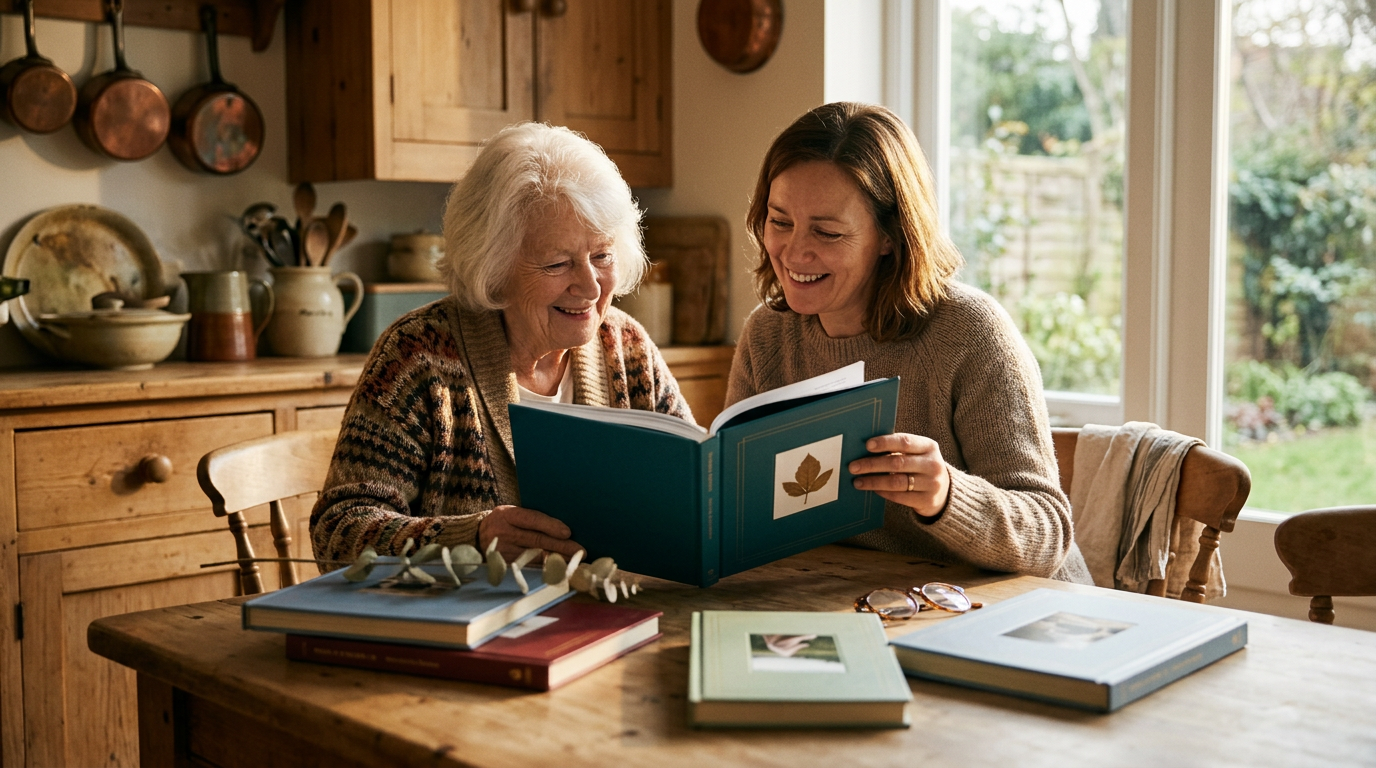
Questions About Her Childhood and Growing Up
1. "What's your earliest memory?"
The answer is almost never what you'd predict. Early memories tend to be small sensory fragments: a smell or the color of a wall, not the big events you'd expect.
2. "What was your bedroom like when you were a girl?"
Physical spaces disappear from family memory first. The quilt on her bed, the wallpaper she hated, the window she climbed out of once. These details ground a story in its era.
3. "What did you want to be when you grew up?"
Some moms became what they dreamed. Most didn't. Both versions are worth hearing (and most kids never think to ask this one).
4. "Who was your best friend as a kid, and what happened to that friendship?"
Childhood friendships shaped who she became. And some ended in ways she's never told anyone.
5. "What got you in trouble most often?"
Mischief stories produce the best recordings. Every time. Moms light up telling them.
6. "What was dinnertime like in your house?"
Food memories are economic history. What her family ate in 1975 tells you more about their finances than any direct question about money would.
7. "What's the most vivid memory you have of your own mother?"
This reaches back a full generation. Whatever she describes is probably the only version of that memory that still exists anywhere.
8. "What scared you as a child?"
Fear memories are permanent. The thing she was afraid of at seven still shapes something about her at seventy. These are surprisingly revealing answers.
Questions About Her Love Story
9. "How did you and Dad meet?"
She thinks she's told this story a hundred times. She hasn't told the version with real details. The version only comes out when someone actually records it.
10. "What was your first date like?"
First-date details fade faster than almost any other memory. If you don't capture them now, they'll exist only as a vague "oh, we went somewhere nice."
11. "When did you know he was the one?"
Rarely a single dramatic moment. It's usually something small: the way he handled a terrible day, or what he said in the car on the drive home from the hospital.
12. "What was your wedding day really like?"
Beyond the photos (which only show the posed moments). The weather, the thing that went wrong, who cried during the ceremony, the person who almost didn't show up. Weddings have stories the photographer always misses.
13. "What's the best advice anyone ever gave you about marriage?"
The advice that stuck is always specific. Something concrete that reshaped how she handled a real situation decades later.
14. "What's a small thing he does that you've never forgotten?"
The small things are the real love story. One woman's grandfather recorded every date with his wife for 60 years. Tuesday, fish and chips at the corner place. The ordinary details became the extraordinary ones after he passed.
15. "What was the hardest year in your marriage?"
Real love stories have hard chapters. These stories teach the next generation what actually holding together looks like.
Questions About Motherhood — Raising You
16. "What do you remember about the day I was born?"
She remembers details you don't know about. The nurse who was kind and the first words she said to you. Ask before those details blur.
17. "What surprised you most about becoming a mother?"
Nobody is prepared for it. The gap between what she expected and what happened is a story nobody's ever asked her to tell.
18. "What was the hardest part of raising kids?"
The honest answer is never "homework" or "bedtime." It's usually something she's kept to herself for decades. Give her space to say it.
19. "What's a parenting decision you second-guessed?"
Every mother has one. The school she chose or the time she said no when she wanted to say yes.
20. "What's something I did as a kid that you never told me about?"
Mothers carry secrets about their children's childhoods. The call from a teacher, the close call in the backyard. Or the thing she found in your room and decided not to mention. These stories are consistently the funniest and most surprising material in any family recording.
21. "What did you give up when you became a mother?"
Ask this gently. The answer reveals what she valued before you existed. This is her story, and you deserve to hear it.
22. "When did you first realize I was becoming my own person?"
There's always a specific moment. Something you said at five that sounded like an adult. The first time you disagreed with her and turned out to be right.
23. "What do you wish someone had told you about motherhood?"
The answer to this question may be the single most useful piece of parenting advice you'll ever receive. And she's probably never been asked it directly.
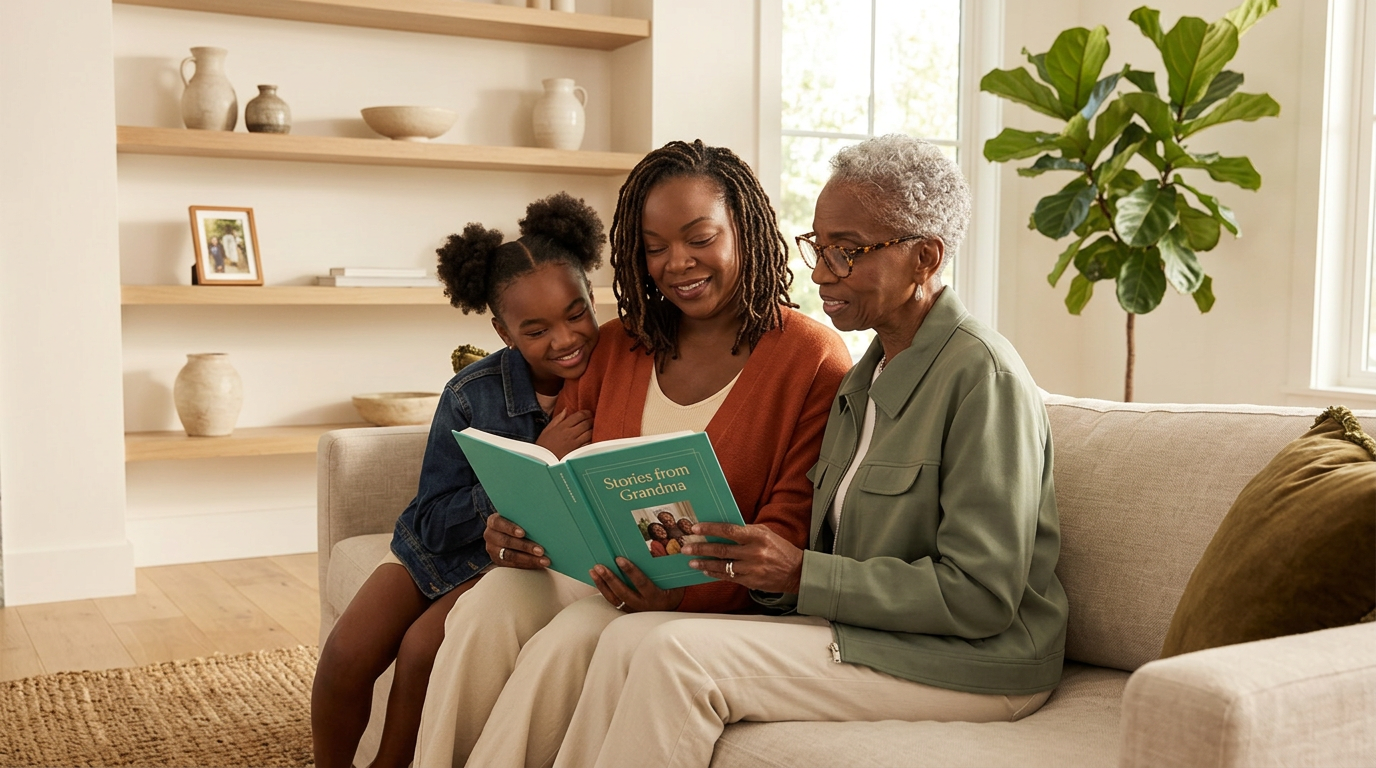
Questions About Career, Dreams, and Turning Points
24. "What was your first real job?"
First jobs shaped a generation of women differently than they shaped men. Your mom's first job tells you what the world let her do in 1978 (or 1988, or whenever she started).
25. "Did you ever dream of doing something completely different with your life?"
Roads not taken. Some moms almost moved abroad. Others almost went back to school at 40. These stories only exist if you ask.
26. "What's the biggest risk you ever took?"
Not every risk works out. Sometimes the risk was leaving a bad situation with no backup plan. Those stories take courage to tell and courage to record.
27. "Who influenced you most outside the family?"
A teacher, a boss, a neighbor, a friend's mother. The answer reveals a part of her life that existed entirely beyond your view of her.
28. "What's the hardest decision you've ever made?"
You'd expect something dramatic, but the hardest decisions are usually quiet ones (the kind that rearranged everything without anyone noticing). People carry them for decades without being asked.
29. "Was there a single moment that changed the direction of your life?"
Everyone has a hinge point. The phone call, the chance meeting, the news that rewired everything that came after. She knows exactly which one hers was.
Questions About Her Mother and Family Heritage
30. "What do you remember most about your own mother?"
Whatever she describes is the only portrait that still exists. Photos capture a face. A voice recording captures a person.
31. "What's the most important thing your mother taught you?"
The answer to this shaped how she raised you. One sentence can connect three generations.
32. "What language did your parents or grandparents speak at home?"
Over 200 languages have gone extinct in three generations, according to UNESCO. The pet names and the way they counted on their fingers may be part of a vanishing tradition that nobody else alive remembers.
Your stories are saved on your device and in iCloud. AI and book creation send selected text and photos to our service. Our service also stores book manuscripts and the original story text so you can edit your book.
34. "Is there a family recipe that never got written down?"
This question makes people cry more than any other on this list. A grandmother's bread, the thing everybody ate at Christmas that nobody alive can replicate. If she knows it, record it today.
35. "What do you know about our family that nobody ever talks about?"
Most families have at least one of these. It's usually less scandalous and more human than you'd expect. If you want to go further back, our guide to questions for grandparents covers the deeper family history.
Questions About Hard Times and What Got Her Through
36. "What's the hardest thing you've ever lived through?"
Build trust over several conversations before asking this one. It works best after she already feels heard and safe.
37. "How did you get through it?"
Survival strategies passed down from mother to daughter. These stories can be more useful than any self-help book because they come from someone who shares your circumstances and your DNA.
38. "Was there a time you almost gave up?"
Vulnerability is rare in mother-child conversations. This question makes space for it without forcing anything.
39. "Who helped you during your worst time?"
Almost always a specific person, not an institution. These stories reveal the relationships that actually held her life together when things were falling apart.
40. "What did losing someone teach you?"
Grief reshapes people permanently. What she learned from loss is part of her story that most children never hear firsthand.
41. "What do you do when everything feels like too much?"
Her coping mechanisms are inherited whether you know them or not. You probably use some of hers already without realizing it. Knowing them by name helps.
Questions About Wisdom, Regrets, and What She Wants You to Know
42. "What do you know now that you wish you'd known at 25?"
This question gets shared more than any other when families post their recordings online. Answers range from blunt financial advice to quiet reflections about worrying less.
43. "What's your biggest regret?"
Handle with care. But regret stories reveal what a person truly valued more than any other question on this list.
44. "What are you proudest of?"
The answer is almost never a career achievement. It's something about family, or a quiet moment of character that nobody else noticed at the time.
45. "What's the best decision you ever made?"
Different from proudest moment. A decision implies a crossroads where things could've gone the other way entirely.
46. "What would you tell your younger self?"
Christine Carter, Ph.D. at UC Berkeley's Greater Good Science Center, found that knowing family history makes children more resilient and better adjusted. This question adds to that history directly.
47. "What do you want me to remember about you?"
Save this for when trust runs deep. The answers are always about character: "That my door was always open." "That I tried my best." These words stay with children for the rest of their lives.
48. "What's something you've always wanted to tell me but haven't?"
The open door. Accept whatever comes through it, including silence.
49. "If you could relive one day of your life, which would it be?"
Across thousands of days, one stands out. The answer reveals what genuinely mattered over an entire lifetime.
50. "Is there anything nobody has ever asked you about?"
End with this. The most powerful family recordings come from this single question because it lets her choose what matters. As one person wrote on BuzzFeed about losing their mother: "My biggest fear is that I stop remembering her altogether." Don't let that be your story.
How to Record Your Mom's Stories
Millions of families already record conversations like these. StoryCorps has collected over 700,000 since 2003. Here's how to do it well:
1. Pick a quiet moment. Not Thanksgiving dinner with twelve relatives and a football game blaring. A Sunday morning over coffee works better. The kitchen table is the best recording studio most families will ever need.
2. Start with childhood questions. Questions 1 through 8 on this list consistently produce the warmest responses. Psychologists call the period between ages 10 and 30 the "reminiscence bump," when the brain forms its strongest long-term memories. Your mom's childhood falls squarely in that window.
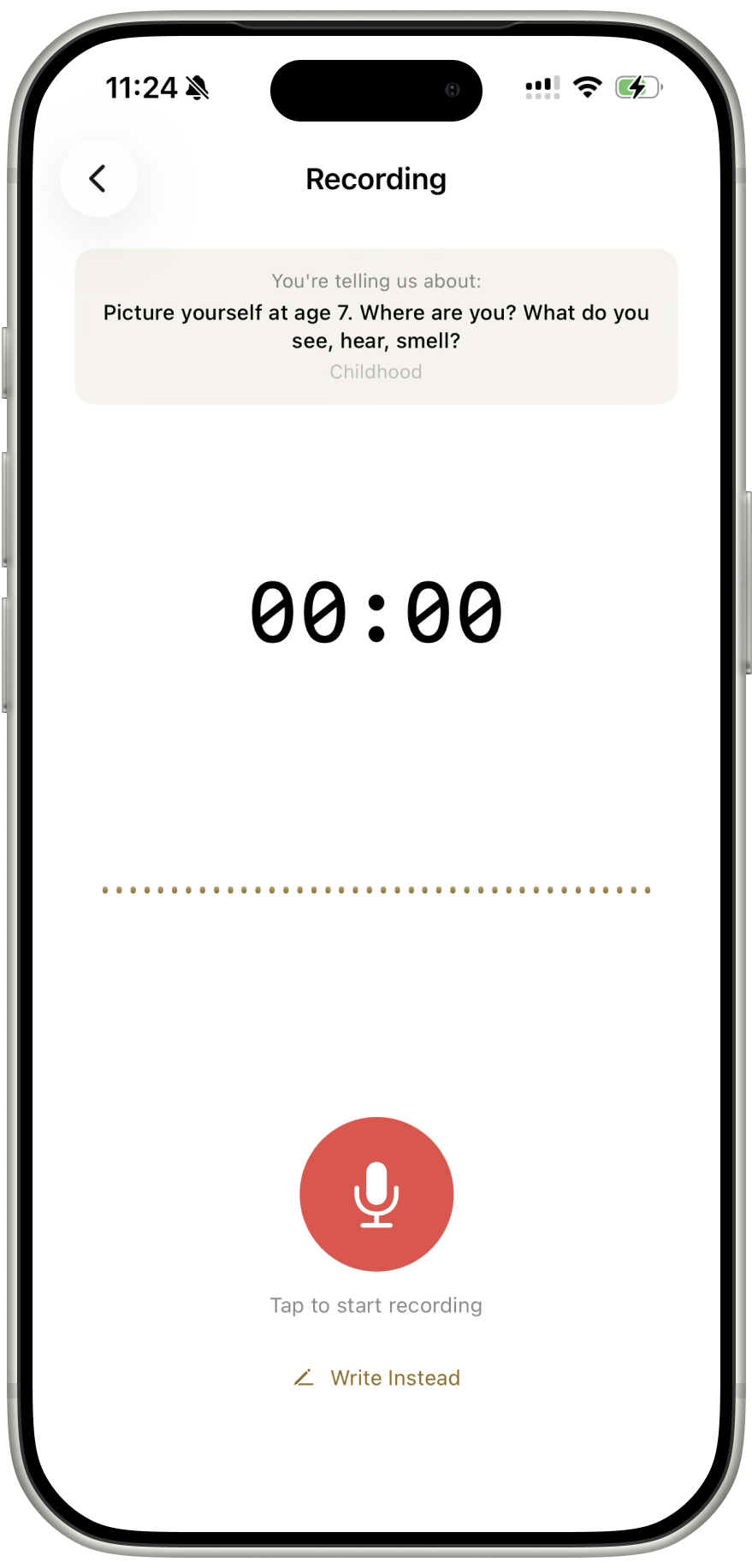
3. Use voice, not text. A person speaks roughly 130 words per minute. They type about 40. In a 15-minute conversation, voice captures four times more material. And voice preserves what typing never will: laughter and the way her voice drops when she mentions her own mother. Tell Me Your Story is built for exactly this kind of recording. It transcribes automatically and organizes stories into life chapters. It works in six languages. Your mom just talks while the app handles everything else. For more recording tools, see our guide to the best apps to record family stories.
4. Keep sessions to 15 or 20 minutes. Memory tires, especially in people over 70 (and a tired storyteller gives surface-level answers). Five short conversations across a month produce richer material than one exhausting two-hour sit-down.
5. Follow the tangents. If she mentions she almost moved to Paris at 22, don't redirect her back to your question list. That tangent is a chapter no prepared question would have uncovered (and it's usually the story that makes the whole recording). The unplanned ones are almost always the best.
How to Turn Your Mom's Stories Into Something Permanent
Digital recordings disappear. They sit in cloud folders until a phone upgrade or a forgotten password wipes them out. NPR reported on saved voicemails becoming the most precious keepsakes after a parent dies. One woman found 86 unheard voicemails from her mother more than four years after her death. Another mother's biggest regret was not recording her own mom's voice when she was dying.
A physical book doesn't depend on a cloud account or a battery (or a company staying in business). It sits on a shelf. It gets picked up at Thanksgiving and read aloud at funerals. Eventually it gets inherited.
Print copies for each sibling and one for her. That book will still be on the shelf in 30 years, long after cloud accounts expire and hard drives crash.
Try Tell Me Your Story
Learn what Tell Me Your Story does, browse features, and get support resources.
Frequently Asked Questions
- How do I start recording my mom's stories?
- Pick a quiet moment when you're alone together. Start with childhood questions, not heavy topics. Place your phone on the table between you and press record. Don't call it "recording your life story" because that phrase makes people self-conscious. Just say "tell me about when you were little" and let the conversation go wherever it goes.
- What if my mom doesn't want to talk about the past?
- Start with happy memories and use family photos as conversation starters. Don't push. Some moms open up gradually over several sessions once they realize you're genuinely interested, not checking a box. If she resists, try asking about food or childhood friends first. Those topics feel safe and often lead to deeper stories on their own.
- What's the best way to record my mom's voice?
- A smartphone placed between you on the table works well. Press record and forget about it. Dedicated memoir apps add automatic transcription and chapter organization, but any voice recorder captures the conversation itself. Focus on the person, not the technology.
- Is it too late if my mom has memory issues?
- If she can still speak and remember some things, it's not too late. Even partial stories have real value on their own. Use photographs as memory triggers and keep sessions to 5 or 10 minutes. Focus on happy memories. People with early-stage memory loss often recall childhood events vividly even when recent memory is impaired.
- How many questions should I ask in one session?
- Three to five. Don't treat it as an interview with a checklist. Pick one section from the list and start with a single question. Let the conversation follow its own path. One good question followed by "tell me more about that" produces better recordings than rattling through fifteen.
- What if I don't live near my mom?
- Phone calls work. Video calls are even better because you can see her face when she remembers something. Record the call with her permission and transcribe it later. Some families do weekly 15-minute calls where they work through one or two questions at a time over several months.

Written by
James WhitfieldFamily Storytelling Advocate at Tell Me Your Story
James Whitfield is a family storytelling advocate and technology writer focused on digital tools that bridge generations. With a background in gerontology and ten years covering elder-friendly technology, James helps older adults and their families navigate the world of apps, devices, and digital preservation.