Voice Memoir App: Record Your Life Story
Updated on
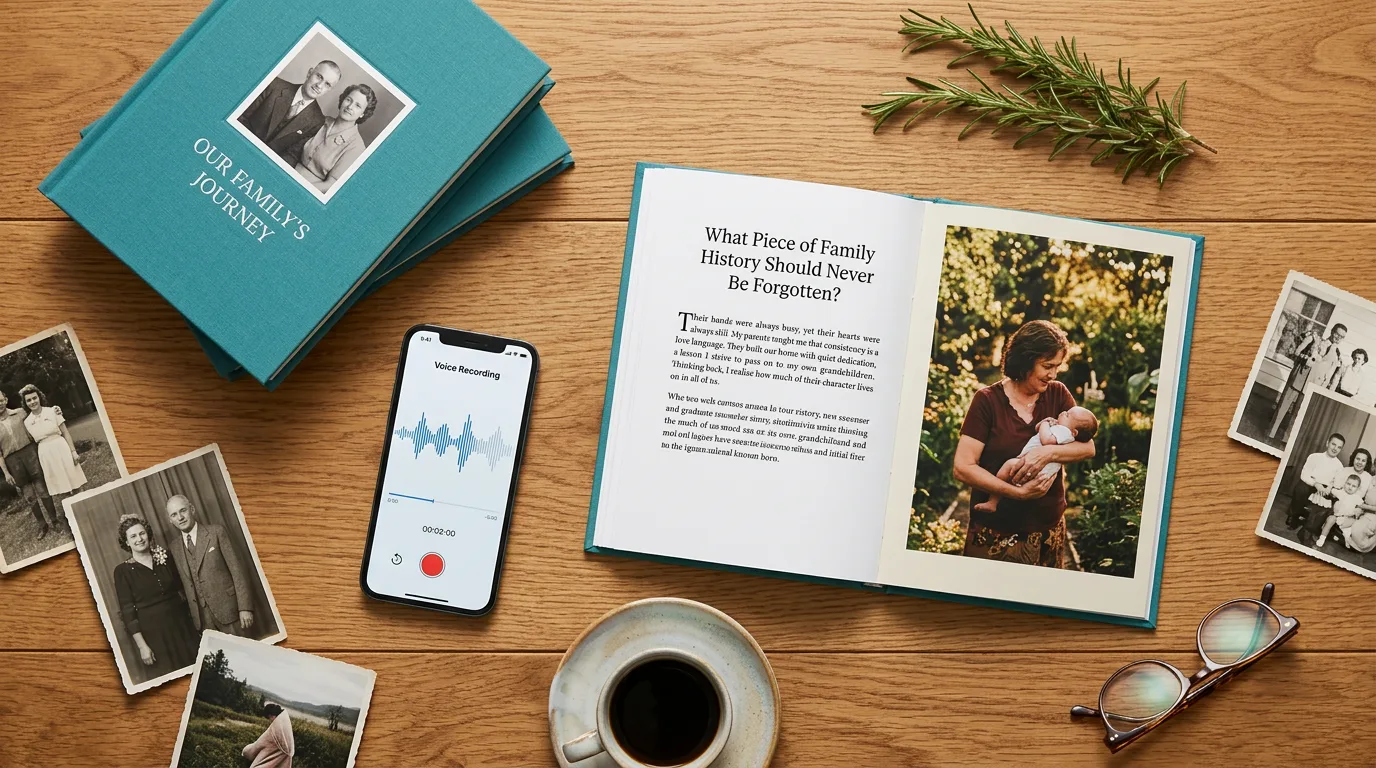
This guide shows you exactly how to do it: from your first recording to holding a finished book in your hands.
Why Your Life Story Matters
Before we get into the how, let's talk about the why. Your life story matters more than you think. Research from Emory University found that children who know their family's stories: where their grandparents grew up, what challenges their parents faced, what moments defined the family: have higher self-esteem, a stronger sense of identity, and greater emotional resilience.
Your stories aren't just memories. They're the foundation of your family's identity. And the only person who can tell them is you.
Many people put off recording their stories because they think their life "isn't interesting enough." This is almost never true. The ordinary moments of your life: the neighborhood you grew up in, your first day at work, the way your family celebrated holidays, the small kindnesses that shaped you: are extraordinary to the people who love you.
Getting Started: Your First Recording
The hardest part is starting. Here's how to make it effortless:
1. Download Tell Me Your Story
The app is available for iPhone and iPad (iOS 17 and later). Download it from the App Store: it's free to use for recording and transcription. You don't need to create an account, enter an email address, or set up anything complicated. The app uses your Apple ID and iCloud to store everything privately.
2. Find a Quiet Moment
You don't need a recording studio. A quiet room in your home is perfect: the kitchen table, your favorite armchair, a comfortable spot on the porch. Turn off the TV, silence your phone notifications, and close the door if it helps.
Some people record best in the morning when their mind is fresh. Others prefer evening, when the day's busyness has settled. There's no wrong time: choose what feels natural.
3. Press Record and Start Talking
Open the app and press the large record button. Then simply start talking. You can pick from the app's guided questions, organized into seven life chapters covering Childhood, Growing Up, Love & Family, Career & Purpose, Adventures & Milestones, Hardship & Resilience, and Wisdom & Reflections, or ignore the prompts entirely and tell whatever story comes to mind.
Don't plan what you're going to say. Don't rehearse. Just talk the way you would if a grandchild were sitting across from you, asking "Tell me about when you were young."
4. Keep It Short
Your first recording doesn't need to be long. Five to ten minutes is perfect. Tell one story: just one. Maybe it's your earliest childhood memory. Maybe it's the story of how you got your first job. Maybe it's the funniest thing that ever happened to you.
Once you press stop, the app transcribes your words automatically, right on your device. You'll see your spoken words transformed into written text in seconds. That moment: seeing your story in print for the first time: is when most people realize "I can do this."
Building Your Life Story Week by Week
A memoir isn't built in a day. The best approach is to record one or two stories per week, each running 5 to 15 minutes. At this pace, you'll have enough material for a substantial book in 8 to 12 weeks.
Here's a suggested weekly schedule using Tell Me Your Story's seven life chapters:
Weeks 1–2: Childhood & Early Memories
- Where did you grow up? What was your house like?
- What are your earliest memories?
- What games did you play as a child?
- What were your parents like?
Weeks 3–4: Growing Up
- What was school like?
- Who were your closest friends?
- What was your teenage life like?
- What did you dream of becoming?
Weeks 5–6: Love & Family
- How did you meet your spouse or partner?
- What was your wedding day like?
- What was it like becoming a parent?
- What family traditions are most important to you?
Weeks 7–8: Career & Purpose
- What was your first job?
- What career moments are you most proud of?
- What did you learn from your work?
- If you could give career advice to a young person, what would it be?
Weeks 9–10: Adventures & Milestones
- What's the most exciting trip you've ever taken?
- What achievements mean the most to you?
- What surprised you most about life?
Weeks 11–12: Hardship, Wisdom & Reflections
- What's the hardest thing you've ever been through?
- How did you find strength during difficult times?
- What do you know now that you wish you'd known at 20?
- What do you want your family to remember most about you?
Once your stories are recorded and transcribed, Tell Me Your Story guides you through three final steps:
Polish (Optional)
The AI Story Polish gently cleans your transcripts: removing "um"s and "you know"s, fixing run-on sentences, smoothing grammar: while preserving your vocabulary, your expressions, and your way of telling stories. You always compare the original and polished versions side by side and choose which to keep. Many people are surprised how good their spoken stories read after a light polish.
Organize
Arrange your stories into chapters. The seven life chapter structure is a natural framework, but you can create custom chapters, reorder stories, and name sections however you like.
Create Your Book
Making It a Family Experience
Recording your life story doesn't have to be a solo activity. Some families turn it into a shared experience:
- Recording sessions with family: A grandchild can sit with the storyteller, asking follow-up questions and sharing their own memories. These conversations often produce the richest stories.
- Guest stories: Family members can add their own recordings about the storyteller. A daughter's memory of bedtime stories or a grandson's memory of fishing trips adds beautiful perspectives to the book.
- Family listening sessions: Play back recordings at family gatherings. The stories will spark conversations and additional memories that can be recorded on the spot.
What If You're Not Sure Where to Start?
Start with the story you tell most. Every family has stories that get repeated: at holidays, at reunions, whenever someone says "Tell them about the time…" That story is your starting point. Record it today.
If no particular story comes to mind, try one of these universal prompts:
- "The house I grew up in looked like…"
- "The most important lesson my parents taught me was…"
- "The moment I knew I'd found the right person was…"
- "If I could relive one day of my life, it would be…"
There's no wrong story to start with. The point is to start.
Your Story Deserves to Be Told
Tell Me Your Story makes it as simple as talking. Record your first memory today: it takes less than five minutes.
Try Tell Me Your Story FreeTry Tell Me Your Story
Learn what Tell Me Your Story does, browse features, and get support resources.
Frequently Asked Questions
- What is a voice memoir app?
- A voice memoir app helps you turn spoken memories into a written life story. In Tell Me Your Story, you choose a prompt, record yourself talking, review the on-device transcript, and organize your stories for a printed memoir. You can start without typing or planning a whole book.
- How do I record my life story?
- The simplest way is to use a voice recording app like Tell Me Your Story. Download the free app on your iPhone or iPad, press the record button, and start talking about a memory. The app transcribes your words on your device automatically. Record one story at a time (5-15 minutes each), and build your memoir over 8-12 weeks. The app offers guided prompts across seven life chapters to help you remember stories you might have forgotten.
- What should I talk about in my life story?
- Start with whatever memory comes naturally: your childhood home, how you met your spouse, your first job, or a family tradition. Tell Me Your Story organizes prompts into seven life chapters: Childhood, Growing Up, Love & Family, Career & Purpose, Adventures & Milestones, Hardship & Resilience, and Wisdom & Reflections. You can follow these or tell stories in any order. The most important thing is to start with whatever story feels right.
- How long does it take to record a life story?
- Plan for 8 to 12 weeks at a comfortable pace of one or two recording sessions per week (5-15 minutes each). A complete memoir typically has 20-40 stories producing 100-200 printed pages. You can start smaller: even 5 stories make a meaningful keepsake: and add more whenever inspiration strikes.
- Can I record my life story on my phone?
- Yes. Tell Me Your Story is designed for iPhone and iPad (iOS 17+). It features a large record button, on-device transcription (no internet required), and guided life chapter prompts. Your stories are saved on your device and in iCloud. AI and book creation send selected text and photos to our service. Our service also stores book manuscripts and the original story text so you can edit your book. The app is specifically designed for elderly users with large touch targets and warm, non-technical language.
- Is my life story interesting enough to record?
- Almost certainly yes. The ordinary moments of your life: your childhood neighborhood, holiday traditions, how you met your spouse, lessons from your career: are extraordinary to the people who love you. Research shows that family stories are one of the strongest predictors of children's emotional well-being. Your grandchildren want to know about your life, even the parts you consider 'normal.'

Written by
Eleanor MitchellMemoirist & Oral History Consultant at Tell Me Your Story
Eleanor Mitchell is a memoirist and oral history consultant who has spent over two decades helping families preserve their stories. She holds a Master's in Creative Writing from Columbia University and has guided more than 500 families through the memoir-writing process.